
by Chad Jocius | Aug 9, 2023 | Observatory, Observatory Events, One-Time
Saturday October 14, 10:30 am – 1:30 pm
The North American eclipse of October 14, 2023 is an upcoming celestial event eagerly anticipated by astronomy enthusiasts in North America. During this eclipse, the Moon will pass in front of the Sun, causing the Sun to appear as a “ring of fire” in the sky. This unique phenomenon occurs when the Moon is at its farthest point from the Earth, and it appears smaller than the Sun, creating a ring-like effect. The eclipse is not visible everywhere in the Earth, but the Moon’s shadow follows a path that will begin in Oregon and pass through parts of Utah, New Mexico and Texas, before crossing over the Gulf of Mexico, much of Central America, a wide swath of Colombia and Brazil, ending in the south Atlantic Ocean. Observers in these areas can see the “ring of fire” effect created by the Moon passing in front of the Sun. The donut or annulus shape of the visible portion of the Sun gives this type of eclipse its name: annular solar eclipse.
In southeastern Wisconsin, only a 40% eclipse is on the horizon, and we’re well-prepared with a variety of devices to ensure everyone can partake in this extraordinary celestial occurrence. Additionally, our staff and volunteers will help you delve into insights about our star and its significance for life here on Earth.
This event requires tickets, but they are solely based on donations to sustain the operational needs of the observatory. Your donation (which covers one ticket) is greatly appreciated. Kindly reach out to us at observatory@hawthornhollow.org to confirm the number of reservations you’d like to make when you make a donation through the link below.
Tickets Here
by William Parker | Aug 1, 2023 | Education, Observatory, Observatory Events, One-Time
Friday, September 1 (9:00 pm – 11:00 pm)
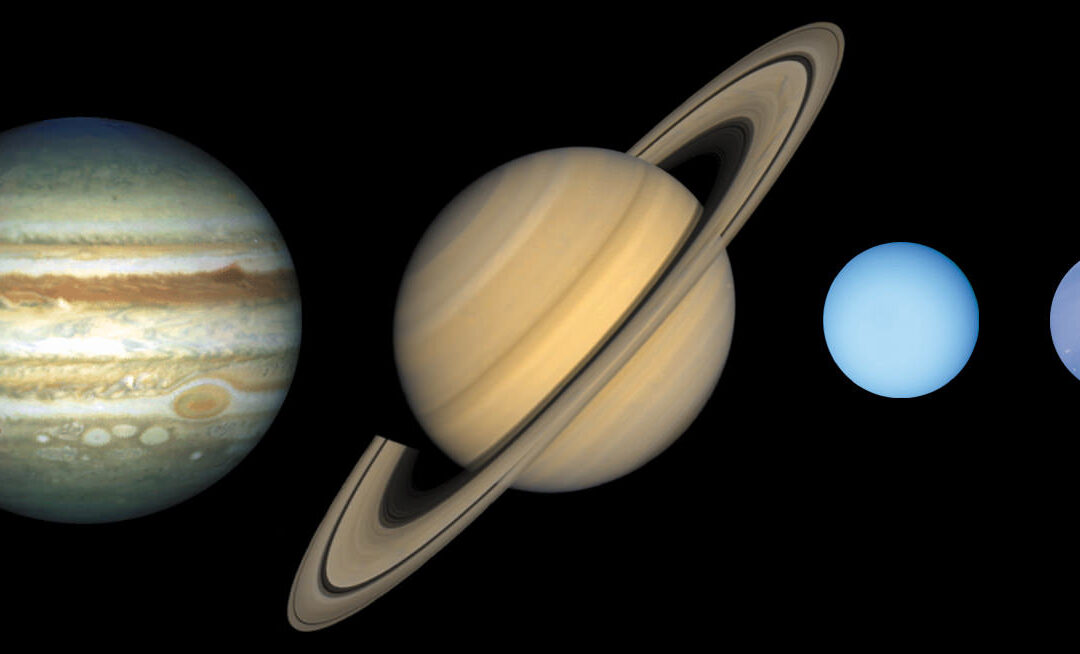
Come out to the Heide Observatory and observe the moon in the evening sky, as it will guide you to Saturn, Jupiter, Neptune, and Uranus the gas giants of our solar system. Given clear skies, you can’t miss these bright worlds. The moon is the second-brightest celestial object, after the sun. Learn about the moon and these amazing worlds as we view them through our telescopes.
This event may need to be rescheduled if the cloud cover outlook is over 40%. Please watch for a confirmation email from the observatory.
Dress appropriately for nighttime outdoor weather, and insect repellent is highly recommended.
Note: Jupiter and Uranus will not be visible until near 11:00 pm.
Find tickets here!
Questions about this event or others please contact us at observatory@hawthornhollow.org
by Chad Jocius | Apr 26, 2023 | Observatory, Observatory Events, One-Time
Saturday (August 12) 11:15 pm – 1:15 am
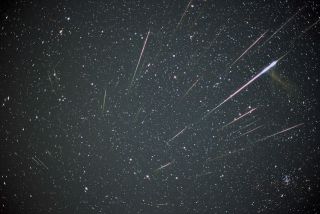
The Perseid meteor shower (also known as The Perseids) is perhaps the most popular meteor shower of the year, visible between July and August. With clear skies, you could see what some consider the most spectacular cosmic light show.
American spectators can expect to see the greatest number of meteors during the shower’s peak between Aug. 12-13 this year, according to the American Meteor Society (AMS).
Every year, Earth passes through the path of Comet Swift-Tuttle from July 17 to Aug. 24, with the shower’s peak — when Earth passes through the densest, dustiest area — occurring Aug. 12-13. That means you’ll see the most meteors in the shortest amount of time near that time. Years without moonlight see higher rates of meteors per hour, and in outburst years (such as in 2016) the rate can be between 150-200 meteors an hour.
Reserve your tickets for The Schoolyard Observatory Perseids Meteor shower event and enjoy a relaxing display of the meteors as you lay back in our zero gravity chairs. Tickets for this event go fast so reserve yours today.
Any questions? Contact us at Observatory@hawthornhollow.org
Purchase Tickets Here

by William Parker | Apr 25, 2023 | Observatory, Observatory Events, One-Time
Wednesday, June 28 – Saturday, July 1 (8:00 pm – 11:00 pm)
Calling all aspiring space explorers! Prepare for an awe-inspiring space camp adventure at the Heide Observatory four consecutive nights June 28 to July 1, 2023, from 8:00 – 11:00 pm, timed to capture the midsummer sunset and the emergence of the night sky. Discover the wonders of our universe through these topics: planets & orbits; motion, gravity, size, & density; sun, stars, & star formation; and exoplanets and exomoons. Get ready for hands-on activities and direct observation as we explore the night sky. Engage in interactive experiments, gaze at stars through telescopes, and use your creativity and imagination to capture your experiences along the way. Join us for an out-of-this-world adventure that will ignite your curiosity and fuel your dreams of space exploration!
Register each participant by purchasing a ticket here or sending a check or money order to the address below by June 14 to secure their spots in this engaging opportunity. In addition a registration survey will be sent to the email address give and should be filled out before June 21. One parent or guardian is welcome to accompany each space explorer, and one must accompany any attendee under age 8. Each participant will receive a small binder and observatory pencil to collect and document their creations during this journey.
Space camp offers exciting outdoor activities that allow participants to explore the wonders of the universe. As a part of this experience, it is essential for all attendees to come prepared for varying nighttime temperatures and potential space mosquito exposure. We kindly request that everyone wears appropriate clothing to stay comfortable and protected.
Feel free to email us with with questions at Observatory@hawthornhollow.org
Heide Observatory
Re: Space Camp
880 Green Bay Rd
Kenosha, WI 53144

by William Parker | Jan 28, 2023 | Observatory, Observatory Events, One-Time
Saturday (Apr. 22) 9:00 pm – 11:00 pm
The Lyrids appear in Chinese writing dating back to roughly 690 BCE, making them one of the earliest meteor showers on record. On the night of April 22, the annual shower will reach its peak for 2023. The meteor shower is a result of Earth passing through the tail of the comet C/1861 G1 Thatcher. When our planet moves through this debris field, the space rocks burn up in Earth’s atmosphere, causing spectacular lights to streak across the night sky.
The Lyrids are one of the weaker annual meteor showers visible from Earth. On peak nights, they usually produce no more than 20 shooting stars per hour. The event is also unpredictable: On rare occasions, spectators are treated to incredible surges of up to 100 meteors per hour. For this reason, the Lyrids are worth checking out for diehard astronomy enthusiasts.
Come out to the Heide Observatory and enjoy a relaxing evening in our anti-gravity chairs as we point out the night-sky objects and watch for meteors.
Tickets and chairs are limited so reserve soon.
This event is weather-dependent and will be canceled or rescheduled by e-mail 24 hours before the scheduled start time in the event of a cloud cover forecast greater than 30%. Reservations can be transferred for any other nightly observatory event.
Dress appropriately for being still in nighttime outdoor weather.
Questions? Feel free to contact us at observatory@hawthornhollow.org
Purchase tickets here, or call 262-552-8196.

by Chad Jocius | Jan 25, 2023 | Observatory, Observatory Events, One-Time
Tonight January 31 6:30 – 8:30 pm
The comet C/2022 E3 (ZTF) could be bright enough to be spotted with the naked eye as it passes the sun and Earth at the end of the first month of 2023. At the start of 2023 Earth will be visited by a newly discovered comet that may just be bright enough to be spotted with the naked eye.
The comet, named C/2022 E3 (ZTF), is currently passing through the inner solar system. It will make its closest approach to the sun, or perihelion, on Jan. 12, and will then whip past Earth making its closest passage of our planet, its perigee, between Feb. 1 and Feb. 2.
If the comet continues to brighten as it currently is, it could be visible in dark skies with the naked eye. This is difficult to predict for comets, but even if C/2022 E3 (ZTF) does fade it should still be visible with binoculars or a telescope for a number of days around its close approach. According to NASA Jet Propulsion Laboratory (JPL), the comet has a period of around 50,000 years. This means that prior to it coming to within around 100 million miles (160 million kilometers) of the sun on Jan. 12 and 26 million miles (42 million kilometers) of Earth on Feb. 2, the last time it came so close was during the Upper Paleolithic period on Earth.
Clear skies for tonight Tuesday, January 31 at 6:30 pm Click here for tickets !
